
When Behaviour Became Financial Identity
The first Trust Layers entered the market without spectacle. They were presented as contextual upgrades an expansion of how reliability could be interpreted. Instead of relying solely on credit history,...
Read More
The Distortion No One Expected
The architecture functioned. Inclusion widened. Default rates stabilised. Then behaviour began to bend. Users learned which signals the system rewarded. Stability metrics improved. Predictability increased. Risk tolerance narrowed.
Read More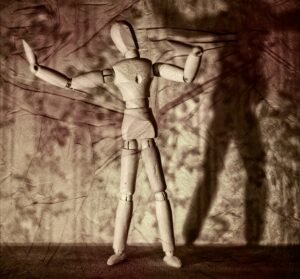
The Human Correction Layer
The second generation of builders resisted refining the algorithm alone. They introduced interpretation. Human Validation Protocols were embedded as contextual layers not to replace machine assessment, but to stabilise it.
Read More
Slowing the Architecture
Fintech’s first decades equated progress with acceleration: instant approvals, automated execution, frictionless settlement. Programmable trust required a different discipline calibrated patience.
Read More
The Direction Forward
If predictability becomes the highest virtue, systems will quietly engineer conformity. If recovery remains legible, systems can engineer resilience. This distinction will define the next phase of financial architecture. Trust...
Read More
Trust as Human Infrastructure
Programmable trust did not eliminate judgment. It redistributed it. Institutions no longer defined credibility in isolation. Networks contributed. Communities contextualised. Individuals shaped financial identity through sustained action rather than inherited...
Read More
When Credit Stopped Feeling Enough
There was a quiet turning point in the early 2030s when financial systems began to feel emotionally incomplete. Approvals were instantaneous. Risk models were precise. Defaults were predicted with clinical...
Read More
A Quiet Shift in How We Build
A Quiet Shift in How We Build Photo by Birger Strahl The most forward-looking organizations are already adapting. They are designing teams, not heroes.They are valuing translators, not just specialists.They are...
Read More
Collaboration as Resilience
Collaboration as Resilience Photo by Richard Wang In a world defined by volatility, economic shocks, climate stress, and cultural fragmentation, collaboration is not just a driver of innovation. It is a...
Read More
The Choice in Front of Us
The Choice in Front of Us Photo by Robby McCullough The future is arriving faster than our old stories can explain. We can cling to the myth of individual genius and...
Read More
AI Changes the Scale, Not the Rule
AI Changes the Scale, Not the Rule Photo by Panashe Tarusenga Artificial intelligence is accelerating this truth. AI can process more information than any individual ever could. It can simulate strategies,...
Read More
The Reality of Collective Breakthroughs
The Reality of Collective Breakthroughs Image by Alexandros Giannakakis Look closely at history, and a different pattern emerges. The Renaissance was not a man, but a network: artists, engineers, patrons, translators,...
Read More
The Myth of Individual Genius
The Myth of Individual Genius Illustrated by Manuel Preciado I remember sitting in a small room years ago, late at night, staring at a problem I thought I should be...
Read More
The Things we Do in The Dark
The things We Do in The dark There is a quiet lie we are taught early in life: that struggle is a detour, that suffering means something has gone wrong,...
Read More